
PECAN Carya illinoinensis:
The pecan (Carya illinoinensis) is an impressive nut tree, known for its aromatic nuts, high productivity and longevity. Although native to North America, the pecan is gradually becoming established in Bulgaria, where the climatic conditions in many regions allow for successful cultivation.
In our nursery we offer high-quality pecan seedlings, suitable for both amateur fruit growers and professional plantations.
PLANT DESCRIPTION
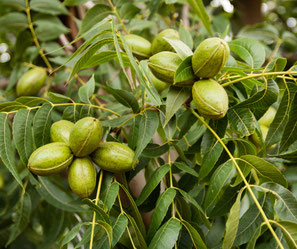
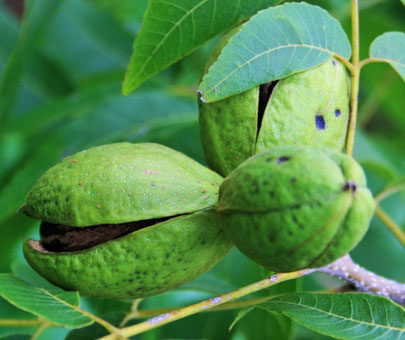
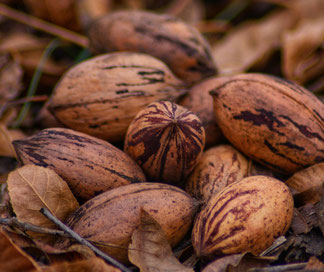
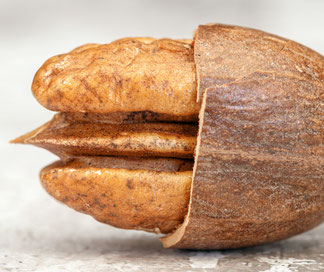
The pecan is a powerful, long-lived tree that reaches 20–30 m in height. It has a beautiful, wide crown and a deep root system. The leaves resemble those of our walnut, but are more elegant, and the fruit is elongated, with a thin shell and an extremely tasty kernel. The tree is valued both for its harvest and for its decorative qualities and resistance.
In our nursery we offer two of the most popular and proven varieties of pecan - Choctaw and Pawnee. Both varieties are suitable for growing in Bulgaria, especially in warmer regions with a long growing season. They are distinguished by high yield, good size of nuts and excellent taste.
ADVANTAGES OF PECAN
- Thin shell and high nut yield – the nuts break easily and have an excellent commercial appearance.
- Rich aroma and high nutritional value – the nuts are preferred for consumption and confectionery.
- Longevity – a properly grown tree can live and bear fruit for decades.
- Disease resistance – relatively less susceptible to diseases than other nut crops.
Choctaw pecan
Origin and characteristics:
Choctaw was created through selection in the USA and is known for its large fruit and high productivity. The tree is vigorous growing, with a strong crown and good disease resistance.
Main advantages of the Choctaw variety:
- Very large nuts - some of the highest quality in the trade.
- Thin shell, which allows easy breaking and a high percentage of whole kernels.
- Early entry into fruiting compared to other classic varieties.
- Resistance to diseases and climatic fluctuations - suitable for our conditions.
- Suitable for both intensive plantings and yards.
Ripening periods:
A relatively late variety - ripens in the second half of autumn, which makes it a good choice for regions with a longer autumn.
Pawnee pecan
When to plant?
The best time is early spring or late autumn.
Planting method
- Dig a hole 50–60 cm deep.
- Add compost or well-rotted manure.
- Place the seedling carefully, without bending the roots.
- Water it abundantly.
- If necessary, place a stake for stabilization.
Distance between trees
20–25 m in industrial plantations and at least 10–12 m in yard conditions.
Origin and characteristics:
Pawnee is one of the most widely grown pecan varieties in the world. It is known for its early maturity, large nut size and extremely sweet taste. The tree is compact, making it suitable for smaller spaces.
Main advantages of the Choctaw variety:
- Very early variety — ripens significantly earlier than Choctaw, which reduces the risk of autumn cold snaps.
- Large nuts with excellent shape and light nut color — preferred in the trade.
- Strong flavor and high oil content, ideal for direct consumption.
- Suitable for areas with shorter autumns thanks to early ripening.
- Excellent productivity even in smaller orchards.
Ripening periods:
One of the earliest pecan varieties — ripens in September - early October.
Origin and characteristics:
Pawnee is one of the most widely grown pecan varieties in the world. It is known for its early maturity, large nut size and extremely sweet taste. The tree is compact, making it suitable for smaller spaces.
Main advantages of the Pawnee variety:
- Very early variety — ripens significantly earlier than Choctaw, which reduces the risk of autumn cold snaps.
- Large nuts with excellent shape and light nut color — preferred in the trade.
- Strong flavor and high oil content, ideal for direct consumption.
- Suitable for areas with shorter autumns thanks to early ripening.
- Excellent productivity even in smaller orchards.
Ripening periods:
One of the earliest pecan varieties — ripens in September - early October.
Choctaw or Pawnee - which variety to choose
| Characteristic | Choctaw | Pawnee |
| Nut size | Very large | Large |
| Shell | Thin | Very thin |
| Taste | Excellent | Strong, sweet |
| Sustainability | Very good | Very good |
| Maturation | Later | Very early |
| Suitable for areas | Warmer with a long autumn | Also suitable for cooler areas |
Recommendation:
For maximum pollination and higher yield, it is a good idea to combine both varieties in one planting.
PLANTING PECAN SEEDLINGS
Climate
Pecan prefers warm, long summers and mild winters. It is not as susceptible to disease and can tolerate lower temperatures in winter, but grows best in areas without sudden spring cold snaps.
Soil
- deep
- well-drained
- moderately moist
- rich in organic matter
The tree does not like waterlogging or heavy clay soils.
When to plant?
The best time is early spring or late autumn.
Planting method
- Dig a hole 50–60 cm deep.
- Add compost or well-rotted manure.
- Place the seedling carefully, without bending the roots.
- Water it abundantly.
- If necessary, place a stake for stabilization.
Distance between trees
20–25 m in industrial plantations and at least 10–12 m in yard conditions.
CARE IN THE FIRST YEARS
- Regular watering, especially in summer.
- Mulching to retain moisture.
- Feeding with organic fertilizers to stimulate root growth.
- Crown shaping – removing competing leaders and weak branches.
Pecans usually begin to bear fruit between the 6th and 10th year, and maximum yield is reached around the 15th–20th year.
WHY CHOOSE PECAN SEEDLINGS FROM OUR NURSERY?
- We offer healthy, well-developed seedlings, suitable for most climates.
- We work with proven planting material.
- We advise each client on the choice of location, varieties and growing technology.
- We ensure a high success rate in interception thanks to the proper cultivation and preparation of the plants.
Contacts:
+359 87 877 3078 Karl (English)
+359 88 502 7187 Veselin (BG)
Walnuts Bulgaria
Semerdzhievo / Smilekin, Selskostopanski dvor
GPS Koordinaten: 43°46'32.05"N , 26° 9'44.51"E or 43.775587, 26.162301
+359 (0) 88 7379778 (Български, English)
+359 (0) 87 9119888 (Deutsch/English)
+49 (0) 176 61327754 (Deutsch/English)
+49 (0) 511 12221376 (Deutsch/English)
E-Mail: [email protected]
Visit us on www.facebook.com
